We are saddened to share that our beloved brother Pablo Rodriquez, former Executive Director of Communities for A New California (CNC) passed away on Dec. 8, 2025. CNC is a longtime anchor and partner in California Calls and has been a driver of transformation in rural communities and across the state.
I first met Pablo Rodríguez in the spring of 1994, on the road, marching mile after mile on the United Farm Workers Pilgrimage – a 330-mile march from Delano to Sacramento. It was a sacred moment in our movement’s history. It was the year after my uncle César Chávez passed and when many wondered if the farmworker movement and the dream of dignity for migrant workers would endure.
I was 18 and Pablo was two years older. He joined the march in Livingston, near his hometown of Hilmar, and jumped in immediately – doing whatever needed to be done, a trait he carried his entire organizing career. We walked 10–15 miles a day together, talking about our families, growing up in tiny Central Valley towns, and our plans for the future. I didn’t know it then, but that was the beginning of 30 years of friendship and movement building.
We were young and sometimes complained about the blisters and exhaustion, while 80-year-old farmworking elders passed us, walking with faith and determination. By the time we reached Sacramento, our small group had become thousands. We were breathing in a vision of justice rooted in farmworker struggle, collective care, and deep faith in ordinary people. For the both of us, it was life changing.
Unfortunately, the majority of the public may never know who Pablo was. He helped improve the lives of hundreds of thousands of rural Californians through his organizing for workers’ rights, health care, better schools, and voting power. Before his death, Pablo built lasting movement infrastructure in the Central Valley and beyond – a pipeline of rural organizers he mentored and trained, a model for building political power in communities written off, and a vision for our communities that wasn’t dominated by corporate extraction.
Born in Ciudad Juárez, México and raised in Hilmar, Pablo inherited the principles of benevolence and self-sacrifice from his grandfather Gonzalo Rodríguez, a member of the United Farm Workers. After the march, Pablo joined the UFW as a staff member and became an aide to President Arturo Rodríguez, overseeing voter registration and get-out-the-vote campaigns across the Valley. Like many other young Latinos he joined the campaign to defeat Prop 187 in 1994, a ballot measure that sought to deny public services to undocumented immigrants.
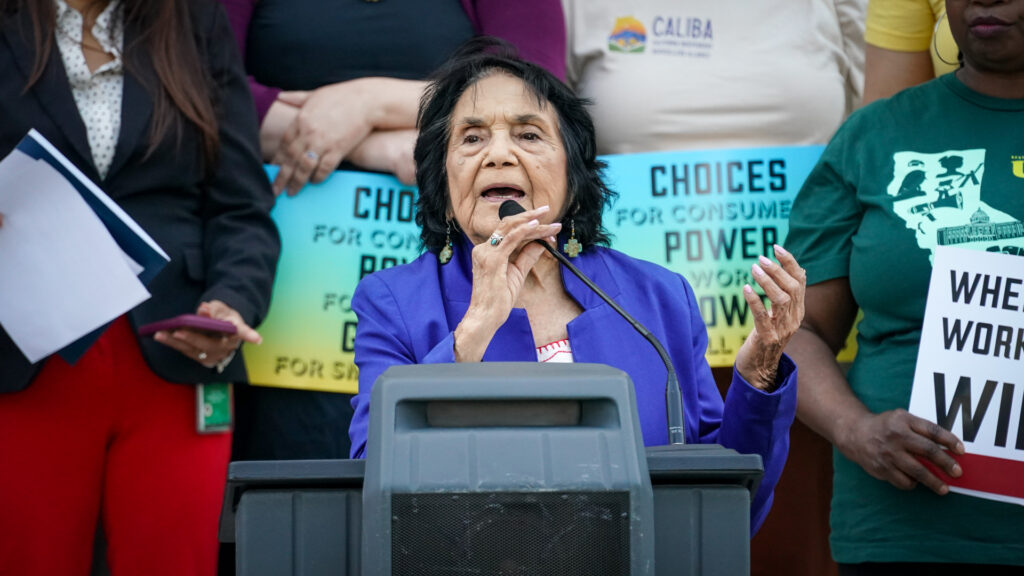
Pablo joined the small and mighty staff of the Dolores Huerta Foundation in 2005. At the time, there was almost no grassroots movement infrastructure in rural communities. Pablo helped train DHFs first cohort of Vecinos Unidos (Neighbors United), a leadership development model rooted in house meetings where neighbors analyzed their own conditions and organized for change. As a result, Vecinos advocates transformed local infrastructure, water access, and civic engagement in Kern County.
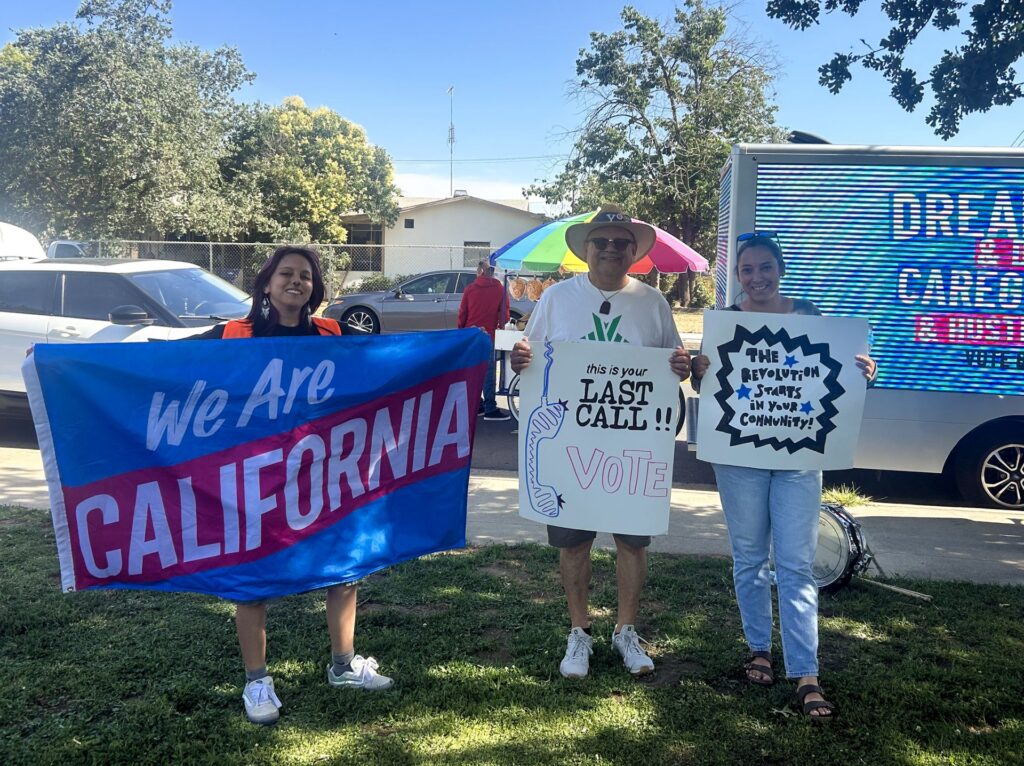
In 2009, Pablo helped start Communities for a New California (CNC) with a bold vision to build durable political power in the Central Valley and rural California. He understood we had to operate on multiple fronts – build leaders, get people to vote, and exercise power beyond elections. He was relentlessly strategic and deeply data-driven, organizing precinct by precinct, race by race. Elections were never the goal, but a tool to demand better schools, healthcare, clean water, and dignity.
He was especially committed to building women’s leadership, particularly Latina leaders. He knew from the data and life that when mothers, tias, and abuelas move, whole communities move with them.
Perhaps his greatest legacy is changing what people believed was possible for rural communities. When CNC joined California Calls in 2009, many believed organizing in rural regions was a waste of time. Pablo believed deeply that the Central Valley could change – that rural, farmworker, immigrant communities were “not too conservative” or “too hard to organize,” – just ignored and under-invested. And if we were going to win big bold change, we had to bring everyone along, including rural areas
Because of his vision, we are now seeing political change across the Central Valley, Inland Valley, and Coachella Valley. These are regions where once no one thought that liberal or progressive candidates could win but where now they hold local, state and congressional offices – with more candidates running every year.
He rejected empire building. When funders wanted to fund just one organization, Pablo encouraged them to fund regional coalitions and partners. He was always thinking about movement infrastructure bigger than himself.
Many people may not know that Pablo was also an artist – a talented spoken-word poet and visual artist. He used humor, culture, and identity to build political consciousness. Pablo always brought joy into the work – loud laughter, sharp jokes, and brilliant analysis all at once. And when Pablo hugged you, he hugged you fully. We didn’t agree on everything – he never hesitated to push back if he disagreed. But if you were his friend, you were his friend for life.
Through it all, he remained grounded in the farmworker communities he came from. He believed he succeeded in life not in spite of being from the Central Valley, but because of it.
The last time I saw Pablo was on September 16, when we spoke to a new generation of organizers from an array of groups that didn’t exist when we were young marchers on our way to Sacramento. Pablo understood we stood on the shoulders of ancestors, and that we had a responsibility to never leave our communities behind. He would say, “I just got the baton, and I’m running as far as I can before I pass it on to the next generation.”
Thank you, Pablo, for passing on the baton. We will take it from here, brother.
Pablo Rodriguez PRESENTE!